

India has made significant progress in getting children into schools. Today, approximately 200 million children are enrolled in schools across the country,
both public and private. Yet, for many of them, schooling does not translate into learning.
In urban centres like Delhi, the challenge is stark. Nearly one million children attend government primary schools in the city.
Studies and field experience suggest that almost 30–50% of these children are not learning at grade-appropriate levels, often unable to read,
write, or grasp foundational numeracy skills despite being enrolled in school
For children from migrant and low-income families, the barriers are layered. Frequent relocation, language gaps, overcrowded classrooms,
limited individual attention, lack of academic support at home, and economic stress all compound to disrupt learning. These challenges do
not exist in isolation; they intersect and reinforce one another, leaving many children behind. And that is where GWER steps in.
The cost of this learning gap is profound, not just for the child, but for an entire generation of individuals. When foundational learning is missed in the early
years, children struggle to catch up later. Over time, this closes doors to higher education, dignified livelihoods, and meaningful participation in society.
Bridging this learning gap requires urgent, sustained effort and collective responsibility- bringing together parents, communities, educators, civil society, and institutions to ensure that every child does more than attend school: they learn, grow, and thrive.
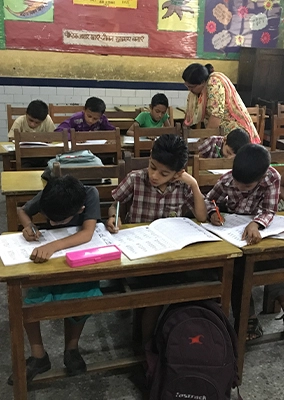
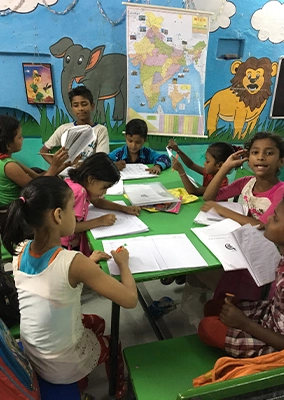
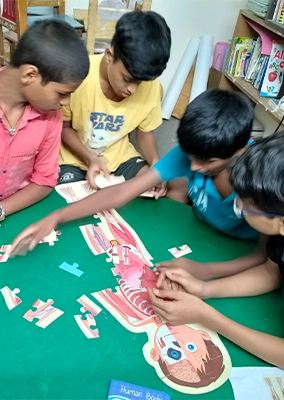
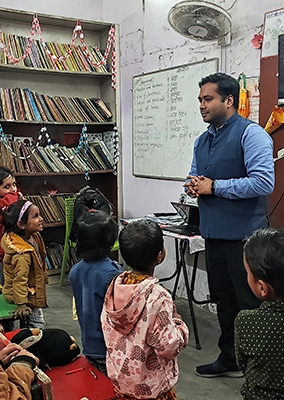

Greenworld Education and Research (GWER) was incepted in 2017 as a non-profit organisation in New Delhi, with an aim to bridge the learning gap for urban migrant children in the city.